


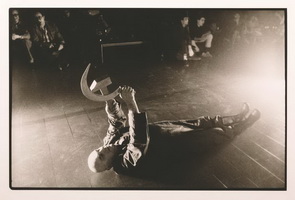
 Sickle, hammer and red star 6, 1986, b/w photography by Velizar Vesović, 405 x 519
Tomislav Gotovac (Sombor, 1937 – Zagreb, 2010) is one of the most important performance artists, authors of structuralistic and experimental film and conceptual artists of the region. He developed his world view, that was subversive and inclined to artistic experiment, in the vivid scene of the Yugoslav cinema clubs during the sixties and the seventies. The phenomena of cinema clubs as incubators of avant-garde thinking is based on the principal state support to clubs as training grounds for the development of public socialist film culture. The support was based on a lesser level of control and so it opened space for social critique and resistance to ideological apology represented in the films produced by the state film companies. Gotovac was an active participant in the Belgrade film scene, an associate of Lazar Stojanović and an actor in his cult film Plastic Jesus produced in 1971. The ban of the film and Stojanović's imprisonment marked the start of a rigid bureaucratic politics. Upon his return to Zagreb, Gotovac spent years doing performances close to body art in public spaces, that were provocative in their content and purposely shocked and scandalized the civic environment. Gotovac's exceptional popularity or the fame of his "rhetorical body" is based on photographic performances that made his artistic practice accessible for the general public. Gotovac's cult status is based on a creative and existential persistence in identifying art and (his own) life, on the consideration of creativity as an extension of the artist's existence and the anticipation of art of individual mythologies through (his own) realization of the absolute uniqueness and inadaptibility of artist's personality. For these reasons Gotovac's performing charisma was immeasurable, and his performances – especially when they referred to the relationship between art and politics – anthological.
The series of photographs "Sickle, Hammer and Red Star" shows a complex coreography of adoration of state-constitutional symbols and symbols of the communist movement in the atmosphere, perspectives and expressive contrast of light and shadow, taken from the aesthetics of German film expressionism of the twenties. After his performances, Gotovac was often brought to the police.
- Sickle, hammer and red star 6, 1986, b/w photography by Velizar Vesović, 405 x 519
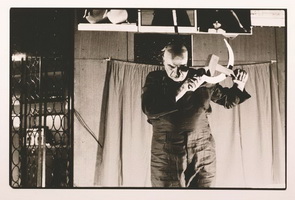 Sickle, hammer and red star 6, 1986, b/w photography by Velizar Vesović, 405 x 519
 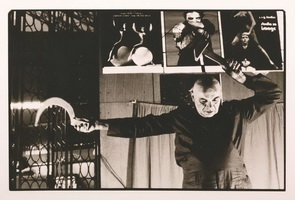 Sickle, hammer and red star 6, 1986, b/w photography by Velizar Vesović, 405 x 519
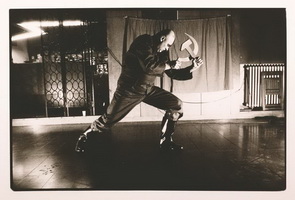 Sickle, hammer and red star 6, 1986, b/w photography by Velizar Vesović, 405 x 519
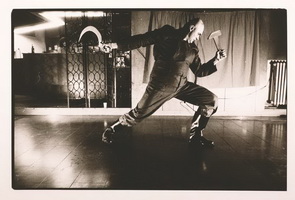 Sickle, hammer and red star 6, 1986, b/w photography by Velizar Vesović, 405 x 519