


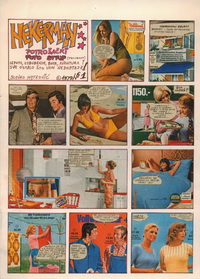
 Nekerman, counsumer photo comic book no. 1, 1979, collage series, 420 x 305
Slavko Matković (Subotica, 1948-1994) is one of the greatest conceptual artists in Serbia. Because of the wide area of his artistic activity, which included literature, poetry (especially visual, concrete and typographical poetry), painting, collage, auteur film, conceptual art, performance, interventions in space and on his own body, arte povera, mail art, comics, multimedia and theory, he is considered to be the most outstanding representative of nomadism. He was also the founder of the avant-garde art group Bosch + Bosch (1969-1976), the international art magazine Wow (1974) and the editor of the magazine "Kontaktor 972" ("Contactor 972", 1972).
His tendency to artistic nomadism made him an innovator and anticipator of new artistic practices. His artistic work was focused on the position of art and authorship issues, the analysis of the process of artistic creation and the exploration of the relationship between visual and linguistic areas. Besides that, he was focused on the abolition of delimitation between high and popular culture and art, audience involvement in the creation of an art work, identification of life and art, appropriation of marketing strategies etc. At the end of his life, in the early nineties, Matković's artistic practice escalated to extreme body art with self-destruction features. Balint Szombathy, his longtime associate artist, summed up his artistic essence in the following words: "Matković did not withdrew before the real dangers which derived from his role of an anti-artist… He bodly faced them because he was not able to resist those challenges, temptations after which he felt the possibility of reaching pure poetry and pure idea. He did not retreat into shelter even if some poetic advanture threatened him physically, simply because he didn't differentiate life and art – this historic moral really wasn't a phrase or mere linguistic juggling for him."
Matković's series of consumer photonovels Nekerman from 1979 lucidly and ironically comments on consumer society and the manipulating subtext of marketing strategies. In those years the Yugoslav economy was in recession, still isolated from the world market, and its population eagered of consumer goods. Despite that, Matković critically anticipated the upcoming process of globalization, planetary dominance of multinational companies and their controlled transformation of biological drives into a consumer impulse.
- Nekerman, counsumer photo comic book no. 1, 1979, collage series, 420 x 305
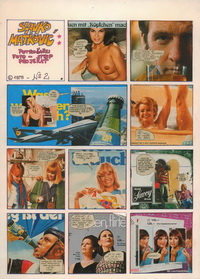 Nekerman, counsumer photo comic book no. 1, 1979, collage series, 420 x 305